Review • June 25 in Berlin
MIP#7
Media Innovation Platform #7: Where is AI already creating value today?
Around 100 participants, four formats, and a packed conference center at DRIVE. Volkswagen Forum: Media Innovation Platform #7 is back after three years, with the topic that is currently reshaping the industry. The day in Berlin provided comprehensive insights into the use of AI in production, distribution, and marketing.

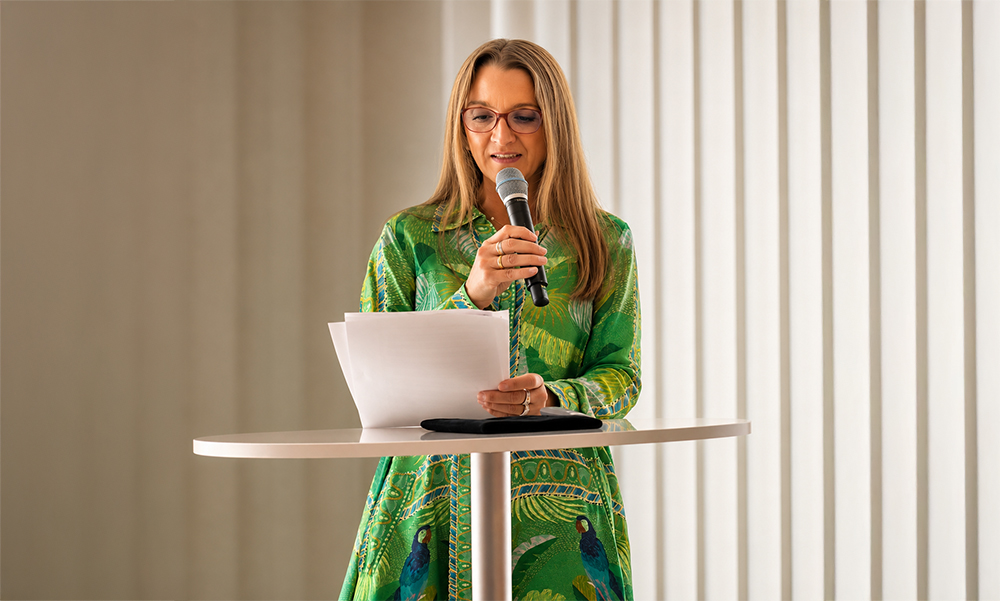
Opening of MIP#7
AI as a game changer: efficiency and value creation in TV & Streaming.
Artificial intelligence is changing TV and streaming. But where is its use already economically worthwhile today? This was precisely the question at the heart of MIP#7. Not visions of the future, but concrete applications from production, distribution, and marketing. The roughly 100 participants not only listened to the speakers, but also actively contributed to the discussions. Media journalist Dr. Jörn Krieger guided the audience through the day.
Nicole Agudo Berbel, Chairwoman of the DTVP and Managing Director of Seven.One Entertainment Group, opened the event with a clear assessment: AI is already permeating the entire value chain. The key questions, she said, are where AI creates added value, efficiency, and quality, and where new business models are emerging. Added to this are questions of copyright, journalistic standards, and responsibility. Challenges that no one can tackle alone.
Nicole Agudo Berbel · Chairwoman of the DTVP Executive Board, Chief Distribution & Partnerships Officer of Seven.One Entertainment Group“The DTVP offers the perfect place for exchange and cooperation. Innovation is created through new tools, and together we will successfully shape the AI revolution.”
(c) DTVP | Egon Huschitt
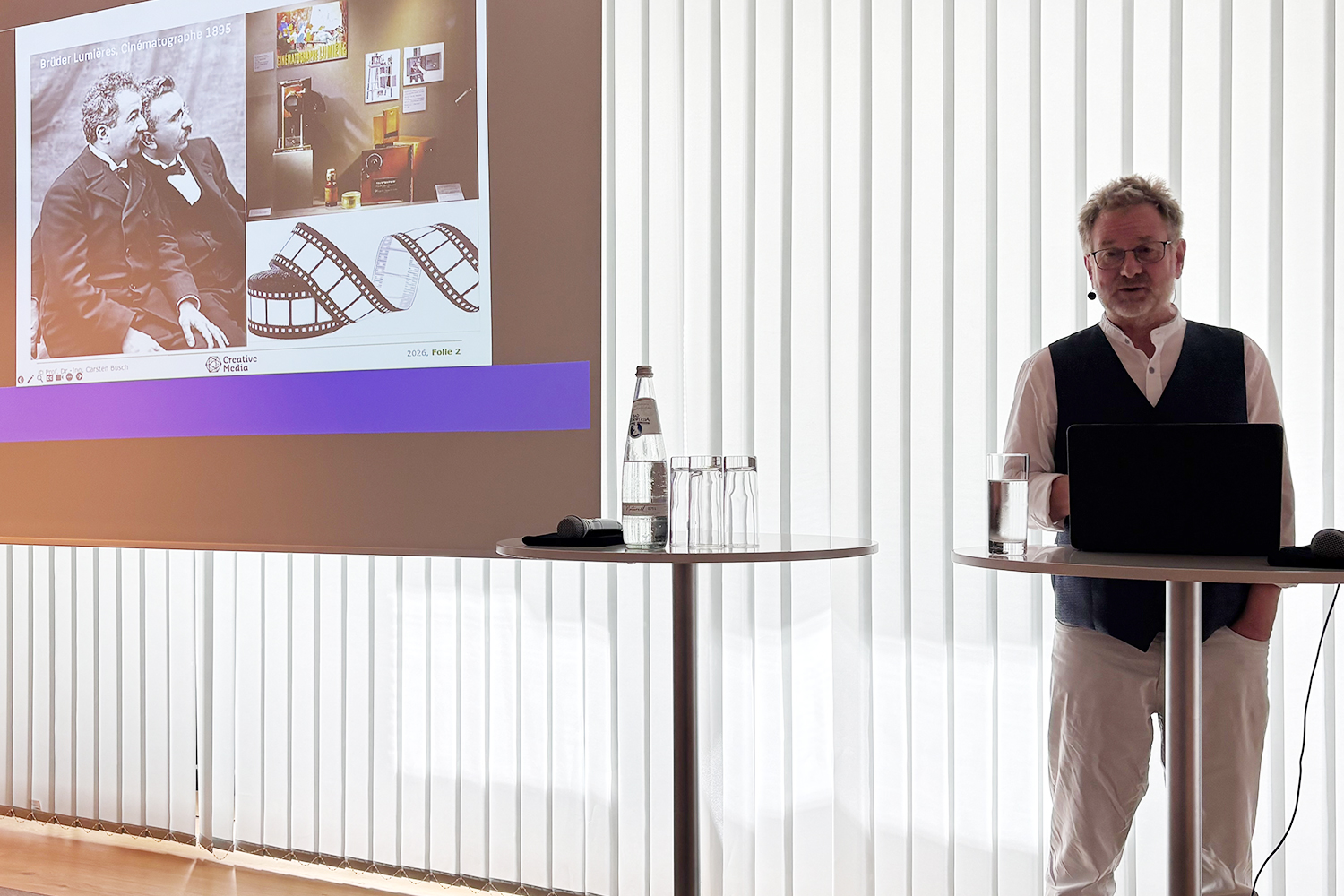
Keynote
Success through illusion
“What can be AI-ified will be AI-ified.”
Under the title “Success through Illusion: What Will the Future Bring After 2,000 Years of AI and 67,000 Years of Media (Technology)?” Prof. Dr. Carsten Busch from the Berlin University of Applied Sciences took the audience on a journey through media history. From the first cave paintings in Indonesia to the present day, he drew a line to the present and concluded that the task of AI is to create dreams and illusions. Which technologies are fit for the future remains to be seen. The direction of the AI trend is not yet clear, and it remains to be proven which business models will be sustainable.
Panel • In English
AI is already here.
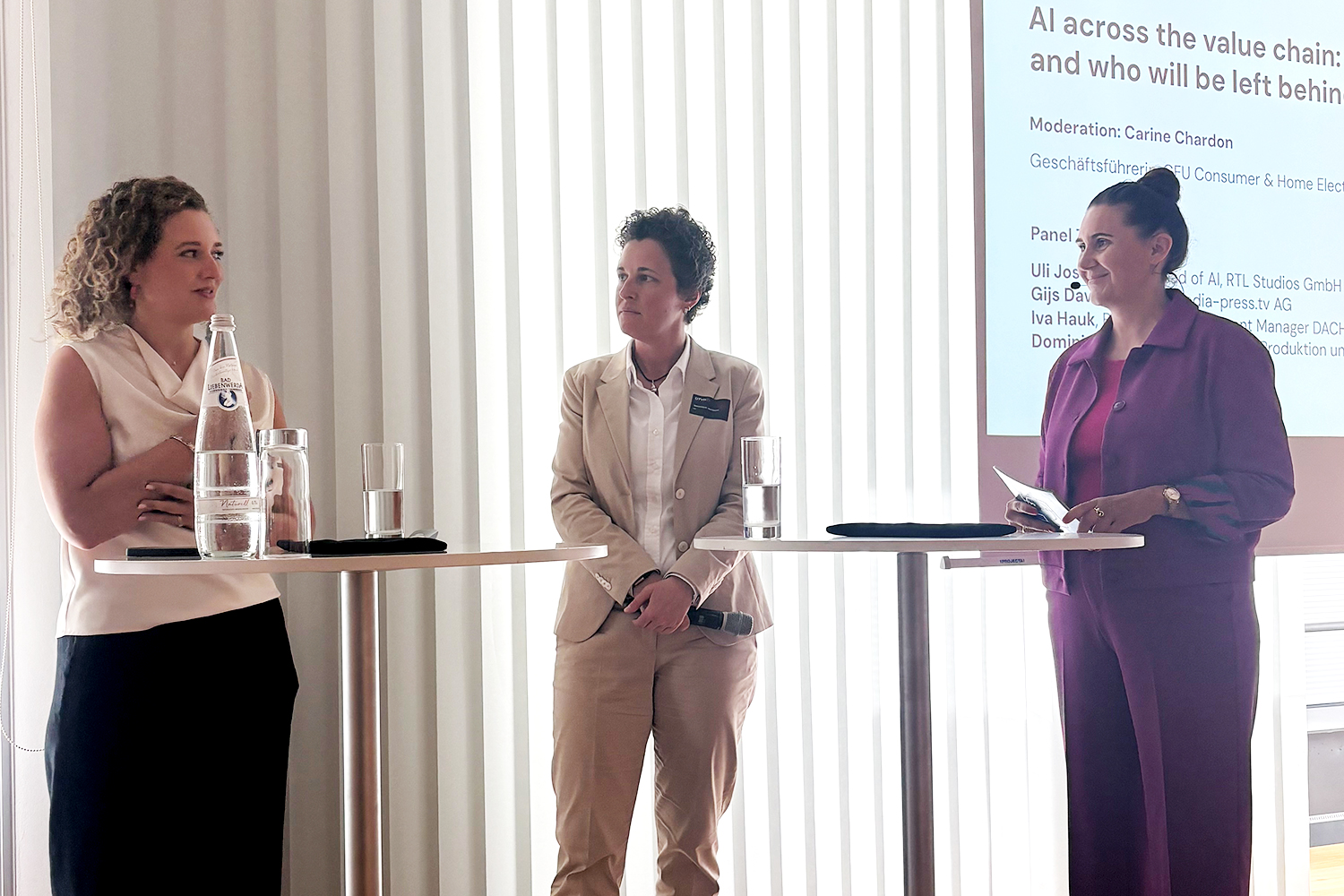
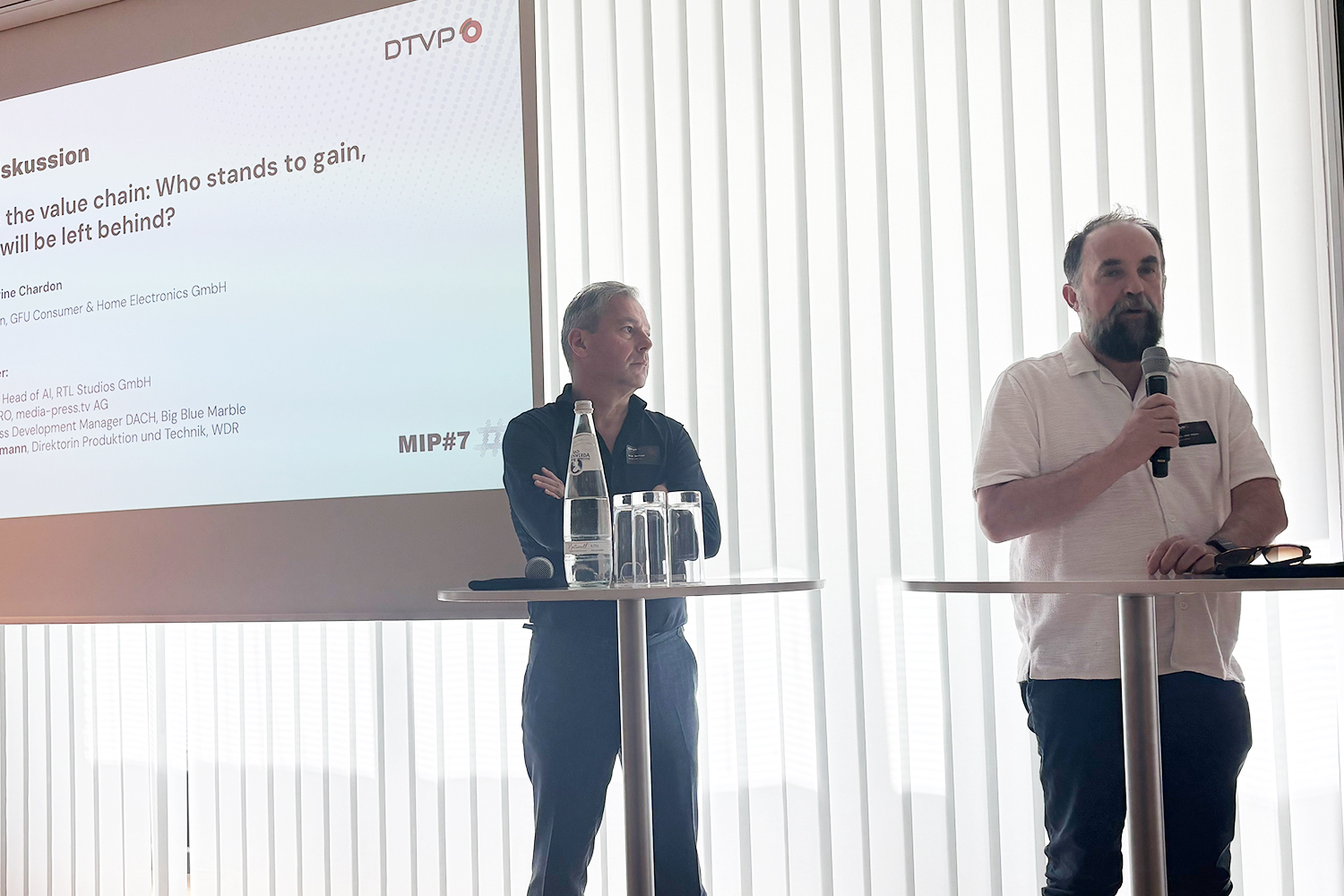
In the subsequent panel discussion moderated by Carine Chardon, Managing Director of GFU Consumer & Home Electronics GmbH, four industry representatives presented AI applications from their organizations. Uli José Anders (Head of AI, RTL Studios GmbH), Gijs Davelaar (CRO, Media Press Group), Iva Hauk (Business Development Manager DACH, Big Blue Marble), and Dominique Hoffmann (Director of Production and Technology, Westdeutscher Rundfunk) showed where AI is already having an impact in their organizations today.
According to Dominique Hoffmann, WDR is at the beginning of its use of AI: at night, one radio station runs AI-generated content for weather and traffic, and for sports the broadcaster creates AI-supported highlights. They are learning a lot and are aware of the risks. It is important that viewers can recognize how content was produced. According to Iva Hauk, Big Blue Marble uses AI to optimize workflows and recommend content. At RTL Studios, the use of AI began a year ago, as Uli José Anders reported, with a focus on content production, workflow, and post-production. AI is a tool for addressing financial pressure and ensuring production quality. At the same time, it is necessary to develop proprietary data centers and large language models in order to maintain independence. Gijs Davelaar explained that at Media Press Group, the use of AI began 15 years ago with improving texts, and recommended intensive cooperation.
Case Study 1
Agentic AI in Broadcasting.
Chris Ziemer (Amazon Web Services) outlined the current situation in media and entertainment. Viewing habits are changing, linear TV is declining, and the creator economy and short-form videos are gaining in importance. AI is already included in the production steps of 40 percent of television series. Viewers expect a personal, relevant, and seamless experience. As an application example, he presented a project with Bloomberg TV in which live TV and an archive of 13 petabytes are combined with the help of AI and delivered in a platform-appropriate way.
Case Study 2
KI im modernen Jugendschutz.
Daniela Hansjosten (RTL Deutschland) presented “Merm:ai:d,” an AI application for youth protection. The tool assesses content based on 14 AI models and achieves an accuracy rate of 98 percent. It is based on the German Youth Protection Act. The application helps review the large volume of around 10,000 pieces of content per year. An 80 percent time saving creates the freedom to manually review the remaining 20 percent.
Spotlight
From the pocket to the cockpit.
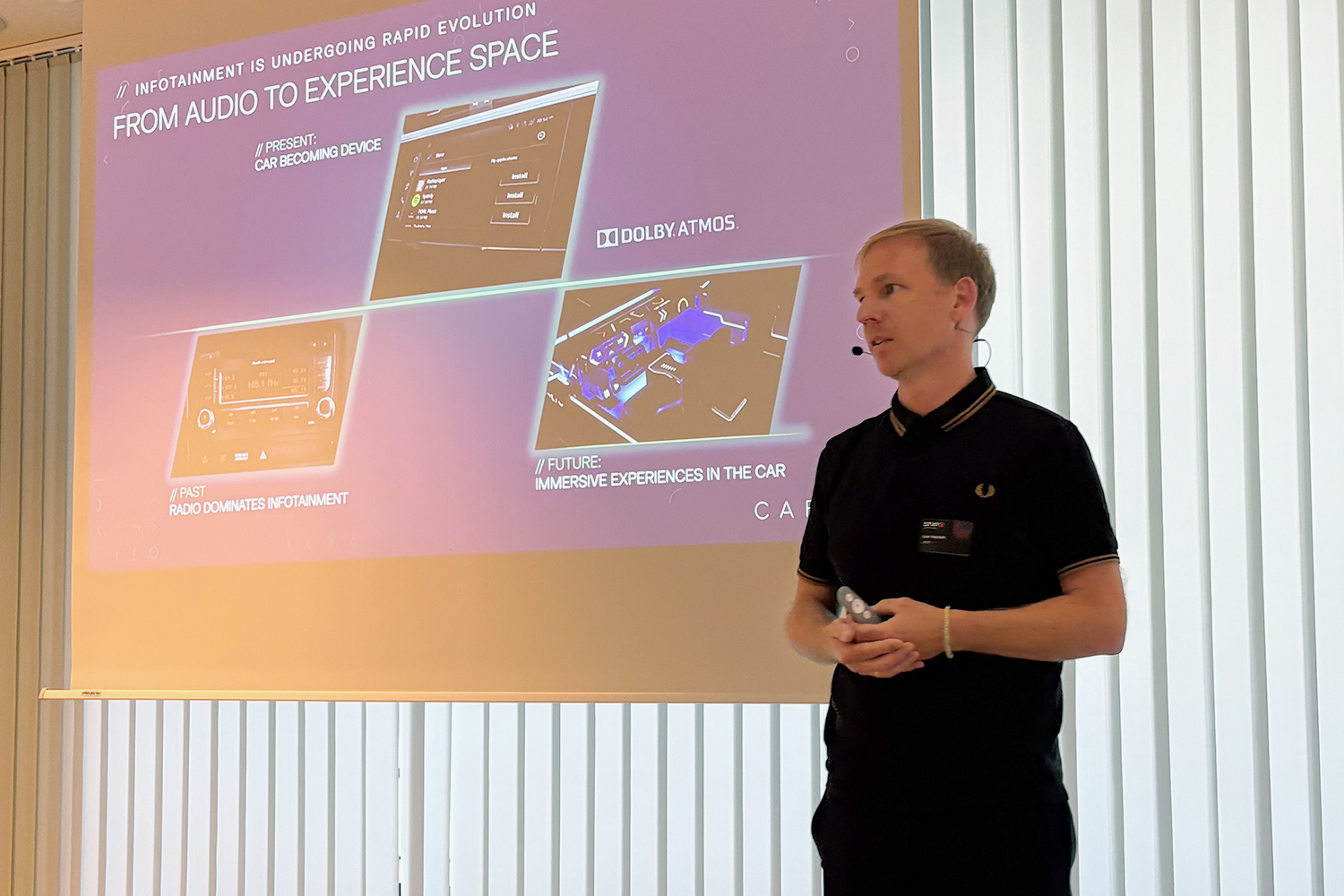
Sven Eckoldt (CARIAD) introduced participants to the automotive sector. For the Volkswagen Group’s platforms, work is underway to optimize user interfaces. This involves overcoming differences in interfaces, logic, and access. The vehicles still have little understanding of users, and there is fragmentation between vehicle, smartphone, and cloud. With the help of AI, they are working on solutions.
Fishbowl
Is AI the catalyst for the industry?
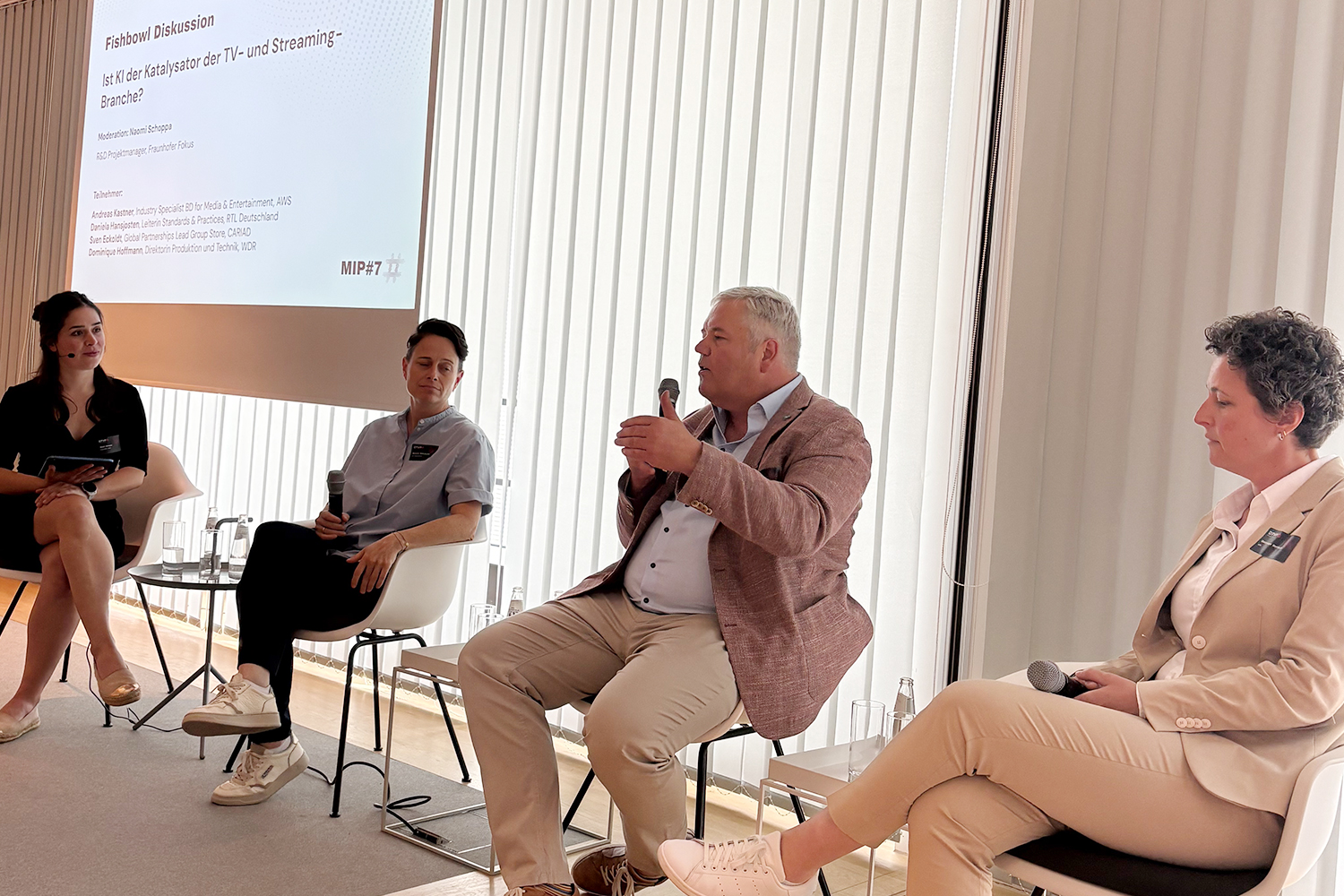
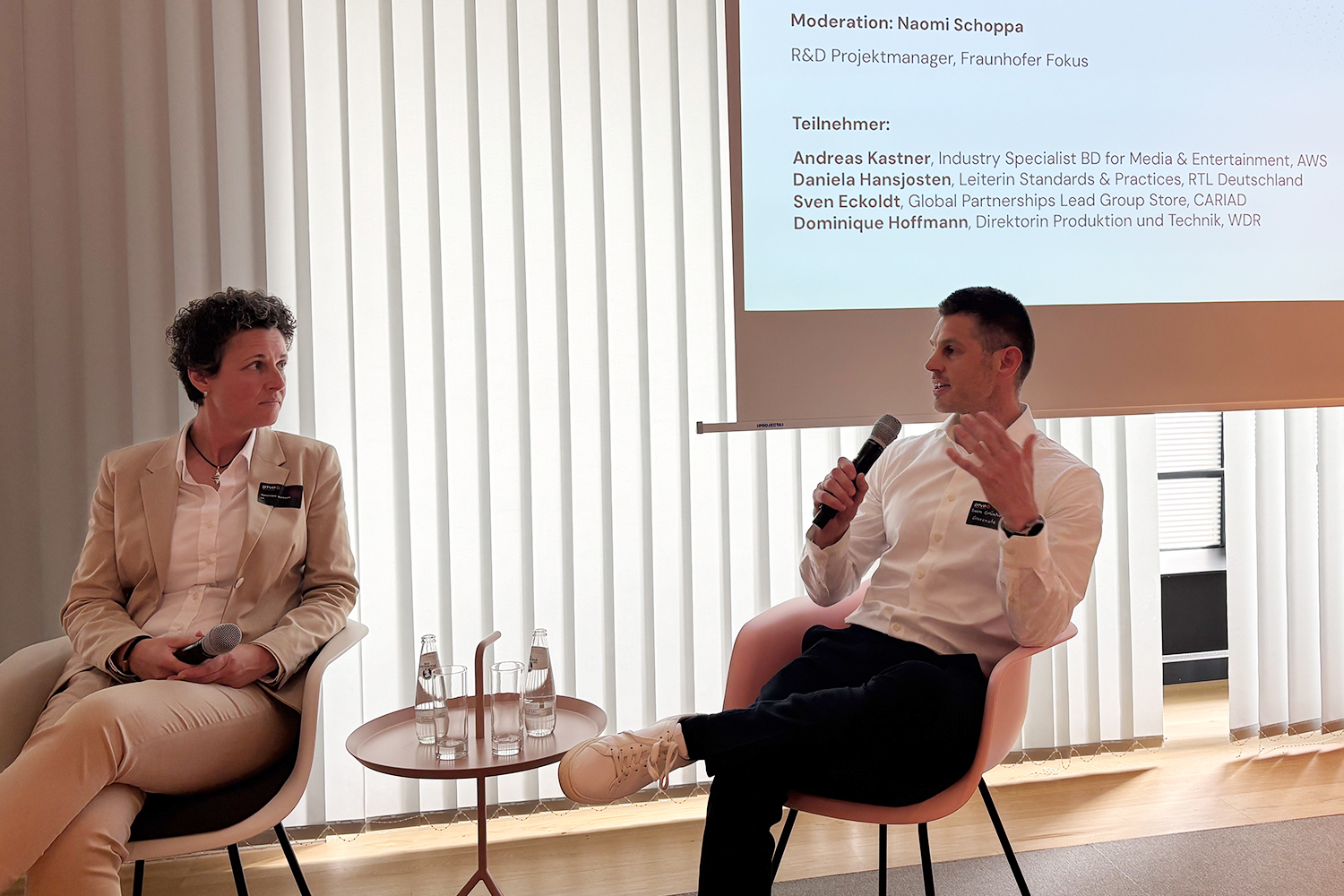
The concluding fishbowl discussion, moderated by Naomi Schoppa (R&D Project Manager, Fraunhofer FOKUS), centered on the question “Is AI the catalyst for the TV and streaming industry?” For Andreas Kastner (AWS), the answer was a clear yes: consumers benefit more, and that is better than stagnation. Daniela Hansjosten (RTL Deutschland) sees the possibility of using AI to create quality despite shrinking budgets. Dominique Hoffmann (WDR) noted that AI topics cannot be stopped, but that the risks must be taken into account. The transformation of personnel in particular will be a major effort. From the fishbowl’s “hot seat,” Sven Grünheidt (Gracenote), among others, noted that the user experience also needs to be improved and that AI helps make content discovery more effective.
Learning
MIP#7 Closing
At the end of the day, Nicole Ludwig, Managing Director of the DTVP, and Dr. Jörn Krieger jointly summarized the learnings from the event before conversations continued with live demos and networking. Live demos of AI applications were presented by ARD, Big Blue Marble, Electric Friends, Fraunhofer FOKUS, Gracenote, Media Press Group, and Simply.TV.
Nicole Ludwig, Managing Director of DTVP“Cooperation across all levels is necessary—from academia to content providers, production, and technology—in order to harness the rapid pace of development in AI for the European media industry. The DTVP is the ideal platform for this, because only with us can innovations be co-created across the entire value chain.”