News
AI as a game changer for efficiency and value creation.
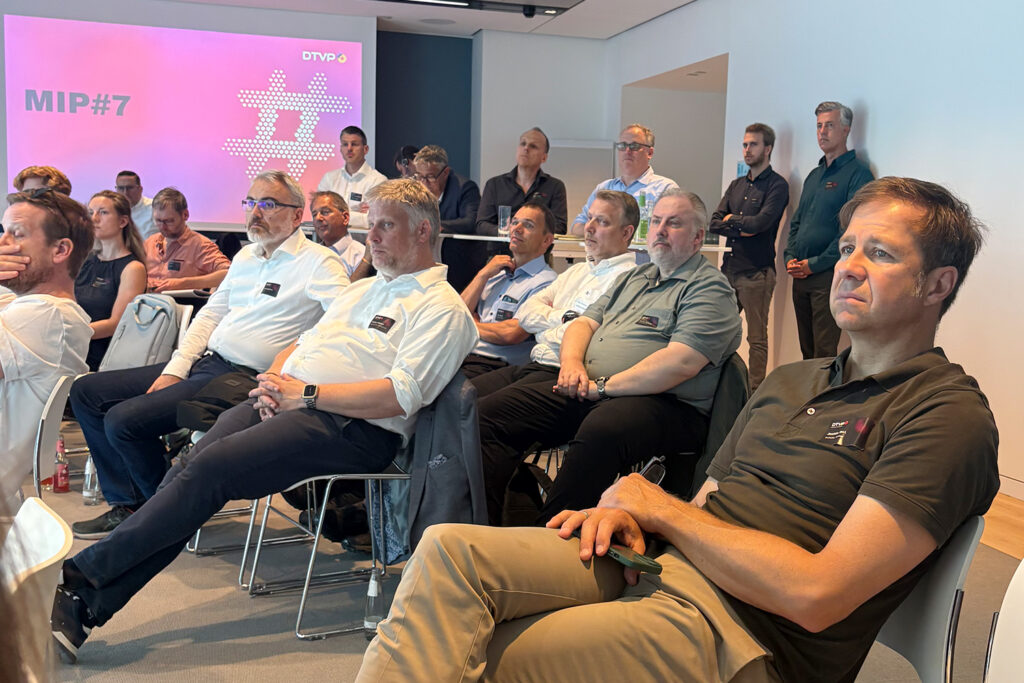
Not visions of the future, but concrete applications from production, distribution, and marketing. That was the common thread running through MIP#7. Media journalist Dr. Jörn Krieger guided the audience through the day.
To kick things off, Nicole Agudo Berbel, Chair of the DTVP and Chief Distribution & Partnerships Officer of Seven.One Entertainment Group, provided context: AI is already permeating the entire value chain; the key questions are those of added value, efficiency, and new business models, as well as copyright, journalistic standards, and responsibility. In his keynote, Prof. Dr. Carsten Busch (HTW Berlin) traced an arc across 67,000 years of media history and cautioned that it remains to be seen which AI business models will prove viable.
Prof. Dr. Carsten Busch · HTW Berlin“Everything that can be AI-ified will be AI-ified.”
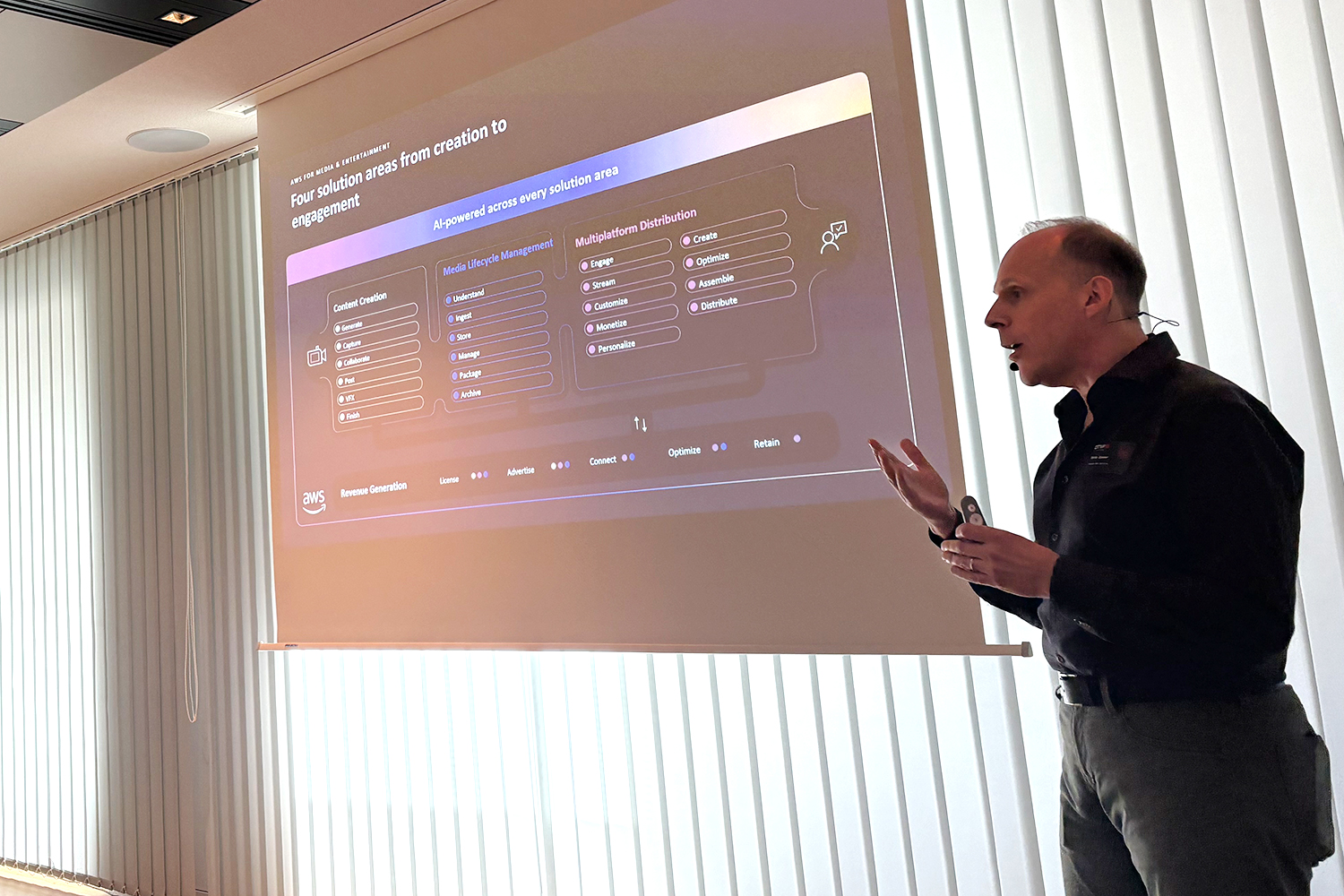
One highlight of the day was the case study by Chris Ziemer, Global Sub-Industry Leader Broadcast & Streaming at AWS, who came to Berlin especially from the USA. Under the title “Agentic AI in Broadcasting,” he showed how profoundly viewing habits are shifting: linear TV is declining, the creator economy and short-form videos are gaining ground, and AI is already embedded in the production steps of 40 percent of TV series. Using a project with Bloomberg TV as an example, he demonstrated how live TV and a 13-petabyte archive can be combined with the help of AI and delivered in a platform-appropriate way. His appeal: Not every AI application has to be spectacular; it is precisely the inconspicuous efficiency gains, such as in content localization, that deliver the greatest benefit.
Chris Ziemer · AWS“Don’t forget the boring.”
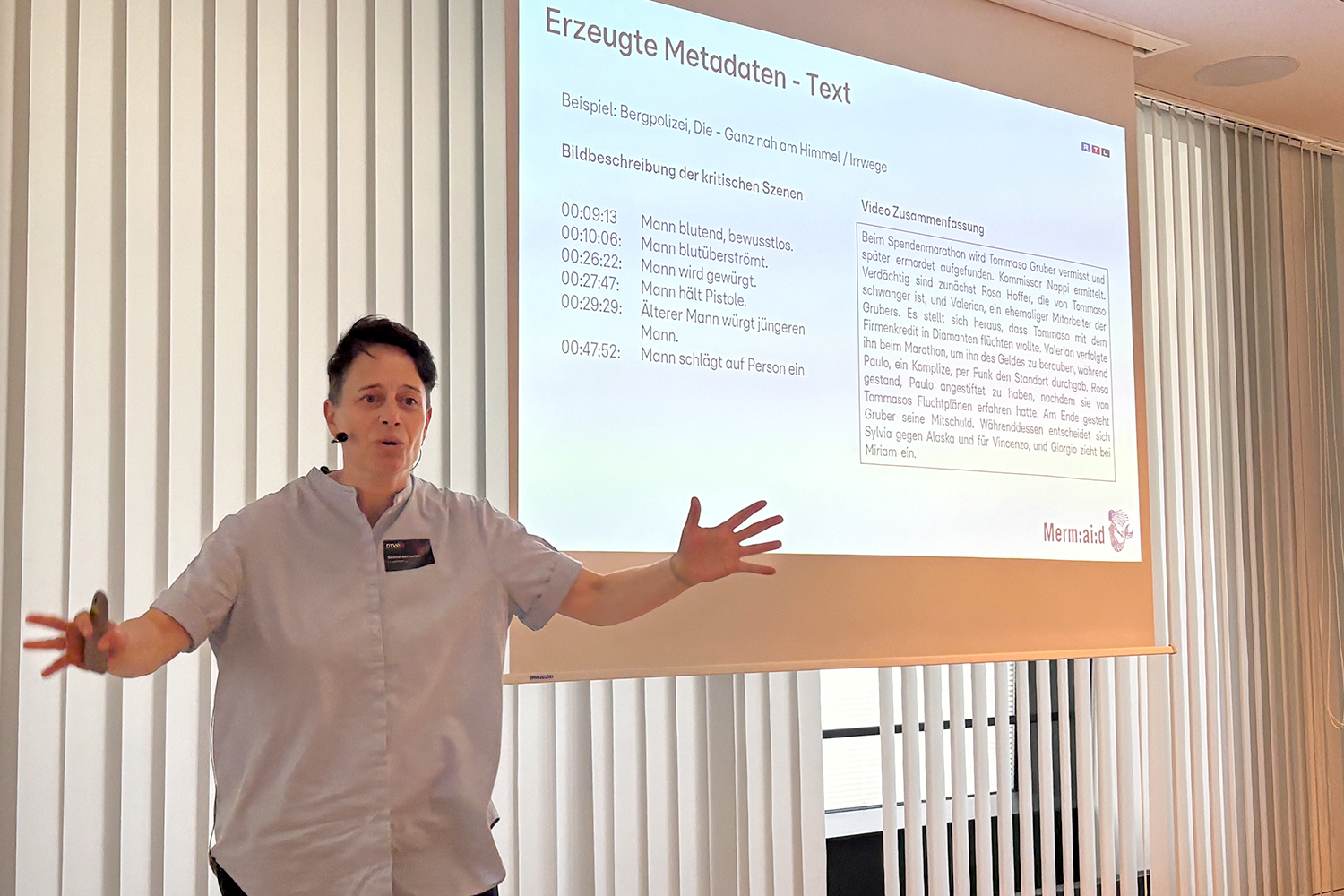
The other sessions also showed just how concretely AI is already being used today. In the panel moderated by Carine Chardon (GFU), Uli José Anders (RTL Studios), Gijs Davelaar (Media Press Group), Iva Hauk (Big Blue Marble), and Dominique Hoffmann (WDR) reported on where AI is already having an impact in their organizations, from optimizing workflows and creating sports highlights to developing their own language models. Daniela Hansjosten (RTL Deutschland) presented “Merm:ai:d,” an AI application for the protection of minors that achieves a hit rate of 98 percent based on 14 models. Sven Eckoldt (CARIAD) led the audience into the automotive sector and showed how media content will make its way into vehicles in the future. In the concluding fishbowl discussion moderated by Naomi Schoppa (Fraunhofer FOKUS), representatives from AWS, RTL Deutschland, WDR, and Gracenote discussed whether AI is the catalyst for the industry, with the consensus that it is changing the world of work while also helping to safeguard quality as budgets decline.
One key learning from the day, according to DTVP Managing Director Nicole Ludwig: cooperation across all levels, from academia and production to technology, is necessary in order to harness the pace of AI development for the European media industry. The DTVP provides exactly the platform for this.
MIP#7 was rounded off by live demos from ARD, Big Blue Marble, Electric Friends, Fraunhofer FOKUS, Gracenote, Media Press Group, and Simply.TV.
Detailed review
The whole day to read up on.
MIP#7 had more to offer than a single news item can capture. On our review page, you will find the complete day, session by session: from the keynote and panel to the case studies and the automotive spotlight, all the way to the fishbowl discussion. Plus impressions and comments from the participants, as well as an overview of all speakers. Take another look at your leisure and relive where AI is already creating value in TV and streaming today.